What’s in Sarasota County’s water?
County and city water are different. Find your supplier first.
Sarasota County Public Utilities and City of Sarasota Utilities are separate systems. The county’s 2024 report describes softening its raw water to around 120–125 mg/L, about 7.0–7.3 grains per gallon. The detailed contaminant table below covers the city utility; it is not a county-supplied home’s report. Source
Email report
Email this water report
Keep a copy for yourself, or share it with someone else.
Email sharing is coming soon. This preview does not send or save email addresses.
Cities & communities in Sarasota County
Choose a community for local context and the relevant utility reports.
Englewood
Water reports, hardness guidance and a starting point for your home.
View water report ↗Lakewood Ranch
Water reports, hardness guidance and a starting point for your home.
View water report ↗Longboat Key
Water reports, hardness guidance and a starting point for your home.
View water report ↗North Port
Water reports, hardness guidance and a starting point for your home.
View water report ↗Sarasota
Water reports, hardness guidance and a starting point for your home.
View water report ↗Venice
Water reports, hardness guidance and a starting point for your home.
View water report ↗Choose the report for your utility
Sarasota County Public Utilities uses several sources, including Carlton Water Treatment Plant and water purchased from Manatee County and Peace River/Manasota Regional Water Supply Authority. City of Sarasota describes a separate groundwater supply and free-chlorine disinfection.
Match the utility and system on your water bill. A ZIP code or mailing address does not establish service boundaries.
What the reports measured
Browse the selected results by utility. These are substances and indicators—not a count of hazards in your home. Open the linked reports for the complete utility records.
ppm = mg/L; ppb = µg/L; ppt = ng/L. ND means below detection, not zero. MCL and MRDL are regulatory benchmarks reported in the source; action levels trigger system action. Annual averages, individual samples and household-tap percentiles are different measures. Compare like with like.
Sample years stay attached to each result. These historical reports do not replace current utility notices or a test of your tap.
10 report entries
No entries match. Try another search or source.
01City of Sarasota UtilitiesReported results, sample dates and source links10
| Substance / indicator | Reported result | Benchmark in source | Sample year / source |
|---|---|---|---|
| Chlorine | 1.4 ppmHighest average of quarterly averagesIndividual range: 0.4–1.8 ppm | MRDL 4 ppm | 2025 Source |
| TTHM | 67.6 ppbHighest locational four-quarter averageIndividual range: 48.7–76.9 ppb | MCL 80 ppb | 2025 Source |
| HAA5 | 8.0 ppbHighest locational four-quarter averageIndividual range: 4.34–10.7 ppb | MCL 60 ppb | 2025 Source |
| Fluoride | 0.22 ppmFebruary sample | MCL 4 ppm | 2023 Source |
| Sodium | 88.0 ppmFebruary sample | Source standard 160 ppm | 2023 Source |
| BariumThe source’s range column says 0.069 ppm, which differs from its detected-level value of 0.0069. Both are disclosed; do not treat this as a corrected measurement. | 0.0069 ppmReported detected level | MCL 2 ppm | 2023 Source |
| Nitrate | 0.26 ppmJanuary sample | MCL 10 ppm | 2025 Source |
| NitriteValue retained as printed in the city report. | 0.26 ppmJanuary sample | MCL 1 ppm | 2025 Source |
| Lead · household tapsNo sampled sites exceeded the action level. | 1.0 ppb90th percentile · June | Action level 15 ppb | 2025 Source |
| Copper · household tapsNo sampled sites exceeded the action level. | 0.084 ppm90th percentile · June | Action level 1.3 ppm | 2025 Source |
A closer look at your local water
These results describe City of Sarasota (FL6580326), not every home or water system in Sarasota County. Match this system to your water bill before using the results.
Source record: SARASOTA-CITY OF · Selected test records: 2014-01-29 – 2025-12-01
Results come from different testing periods. A detection is not, by itself, a finding that water is unsafe. “Not detected” means below the test’s reporting level; it does not mean zero. Missing results mean we have not verified that data here.
PFAS monitoringNone of 29 tested PFAS compounds detected
MyTapWater reports no detections in this panel. Reporting limits vary by compound. The named compounds below are those individually verified in the retrieved source; the full panel is available through the source link. Selected PFAS sample dates: 2023-12-06 – 2024-07-22
29 selected entries
- 11Cl-PF3OUdS
- 4:2 FTS
- 6:2 FTS
- 8:2 FTS
- 9Cl-PF3ONS
- ADONA
- HFPO-DA
- NEtFOSAA
- NFDHA
- NMeFOSAA
- PFBA
- PFBS
- PFDA
- PFDoA
- PFEESA
- PFHpA
- PFHpS
- PFHxA
- PFHxS
- PFMBA
- PFMPA
- PFNA
- PFOA
- PFOS
- PFPeA
- PFPeS
- PFTA
- PFTrDA
- PFUnA
Lithium monitoringNot detected
MyTapWater reports lithium was tested and not detected. Selected lithium sample dates: 2023-12-06 – 2024-06-03
More tested substances12 selected entries
Selected historical tests, with their original dates. “Detected” means at least one positive result in the listed period. “Below reporting level” means all retrieved samples for that entry were below the reporting level. These older tests do not describe today’s water at your tap.
| Substance | Reported result | Sampling period |
|---|---|---|
| chromium-6 | Detected | – |
| strontium | Detected | – |
| chromium | Detected | – |
| molybdenum | Detected | – |
| vanadium | Detected | – |
| cobalt | Below reporting level | – |
| 1,1-dichloroethane | Below reporting level | – |
| 1,2,3-trichloropropane | Below reporting level | – |
| 1,3-butadiene | Below reporting level | – |
| 1,4-dioxane | Below reporting level | – |
| 17-alpha-ethynylestradiol | Below reporting level | – |
| 17-beta-estradiol | Below reporting level | – |
This is a selection of results from MyTapWater, which compiles public water-system records. Open the source for the complete tables, methods and reporting limits. Check your utility’s latest report and current notices for updates. Source
A list of tested substances is not a list of what a filter removes. Choose a system using its verified contaminant-reduction specifications and your water source. A softener addresses hardness and remains optional.
Do you need a water softener?
No. Softening is optional and is a separate decision from filtration. Use a home hardness test and your preferences about scale and water feel; your plumber confirms equipment size and settings.
Sarasota County’s 2024 Consumer Confidence Report says its raw water is softened to around 120–125 mg/L, approximately 7.0–7.3 gpg. This is dated county treatment guidance, not a 2025 monitoring range or a measurement at your tap. It does not establish the City of Sarasota’s hardness. Keep softening optional and test your incoming water before selecting settings. Source
Hardness describes dissolved minerals, not an overall water safety score. A filter and a softener do different jobs. Source
Use my water and home detailsSarasota County treatment guidance · 2024 report · around 120–125 mg/L
Use the source and period shown here. Confirm your supplier and test incoming water before an existing home softener. Source
Softening is an optional choice for scale and water feel.
A filter, a softener, or both?
Choose the job you need done. Size comes next, based on water use and peak flow.
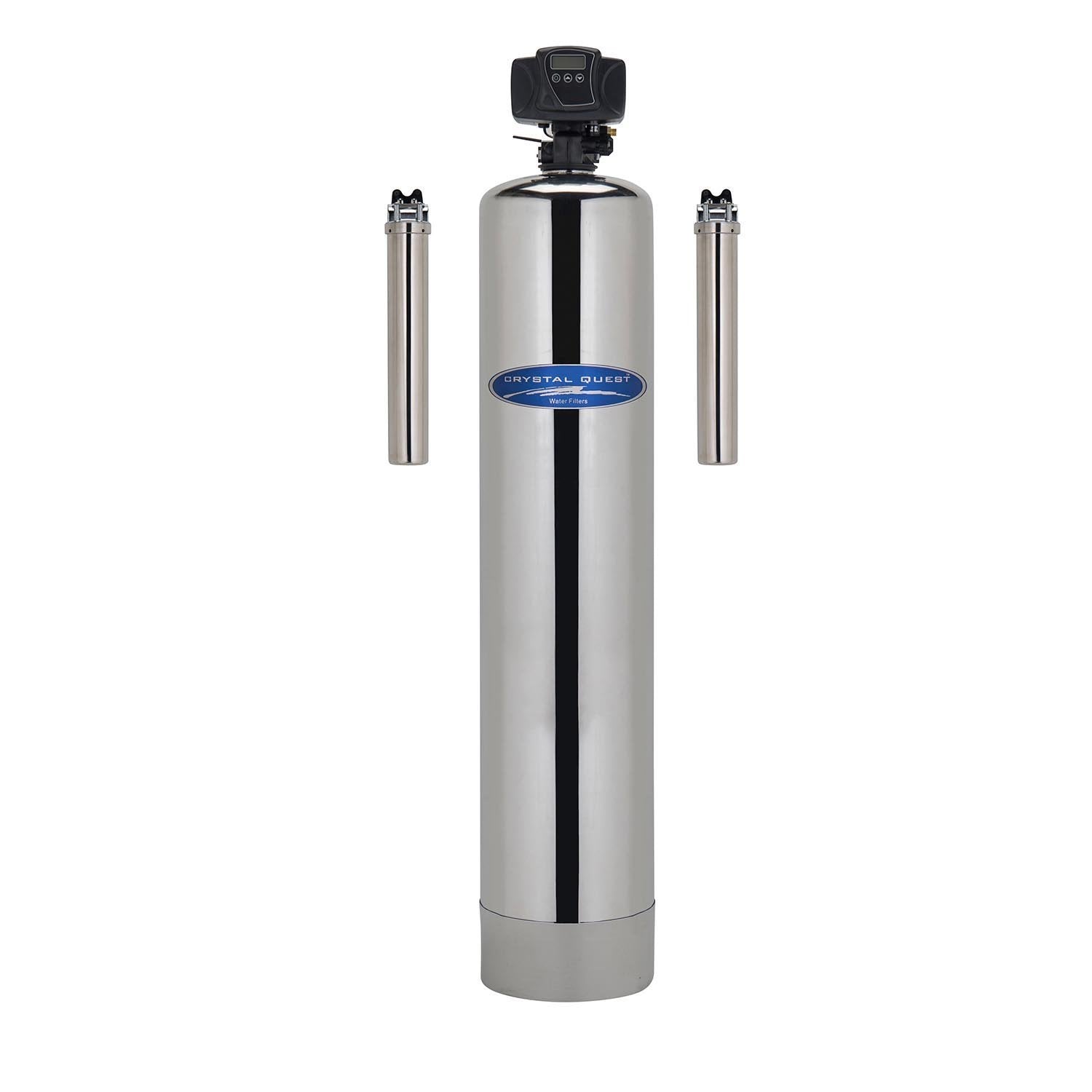
Stainless steel whole-home filter
For whole-home filtration goals. Match the exact system’s performance claims to the substances you want to address.
A filter alone does not replace a hardness-removing softener.
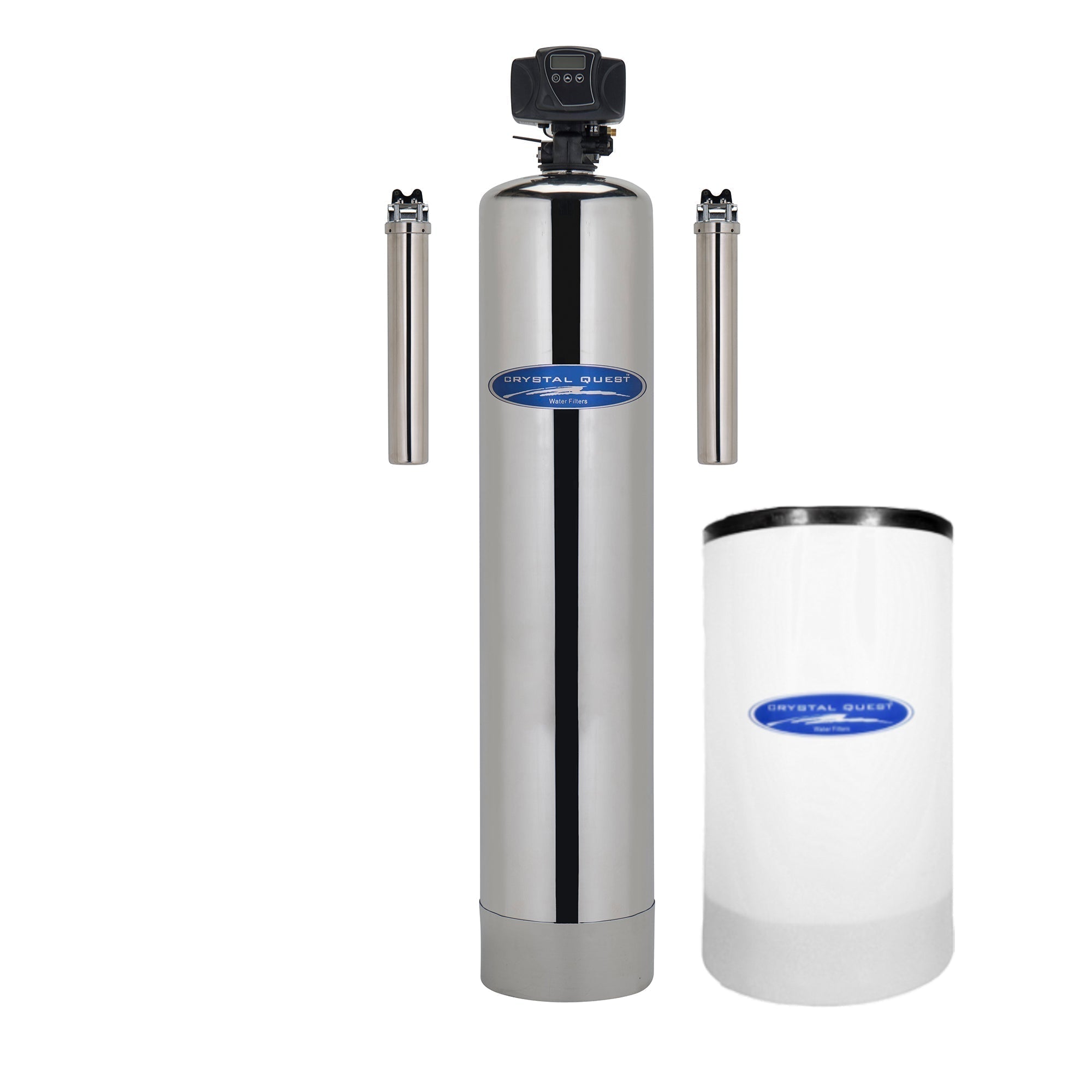
Stainless steel whole-home softener
Optional for hard-water scale and water feel. A softener removes hardness minerals; it is not a general contaminant-removal system.
A softener does not replace a filter selected for a specific contaminant.
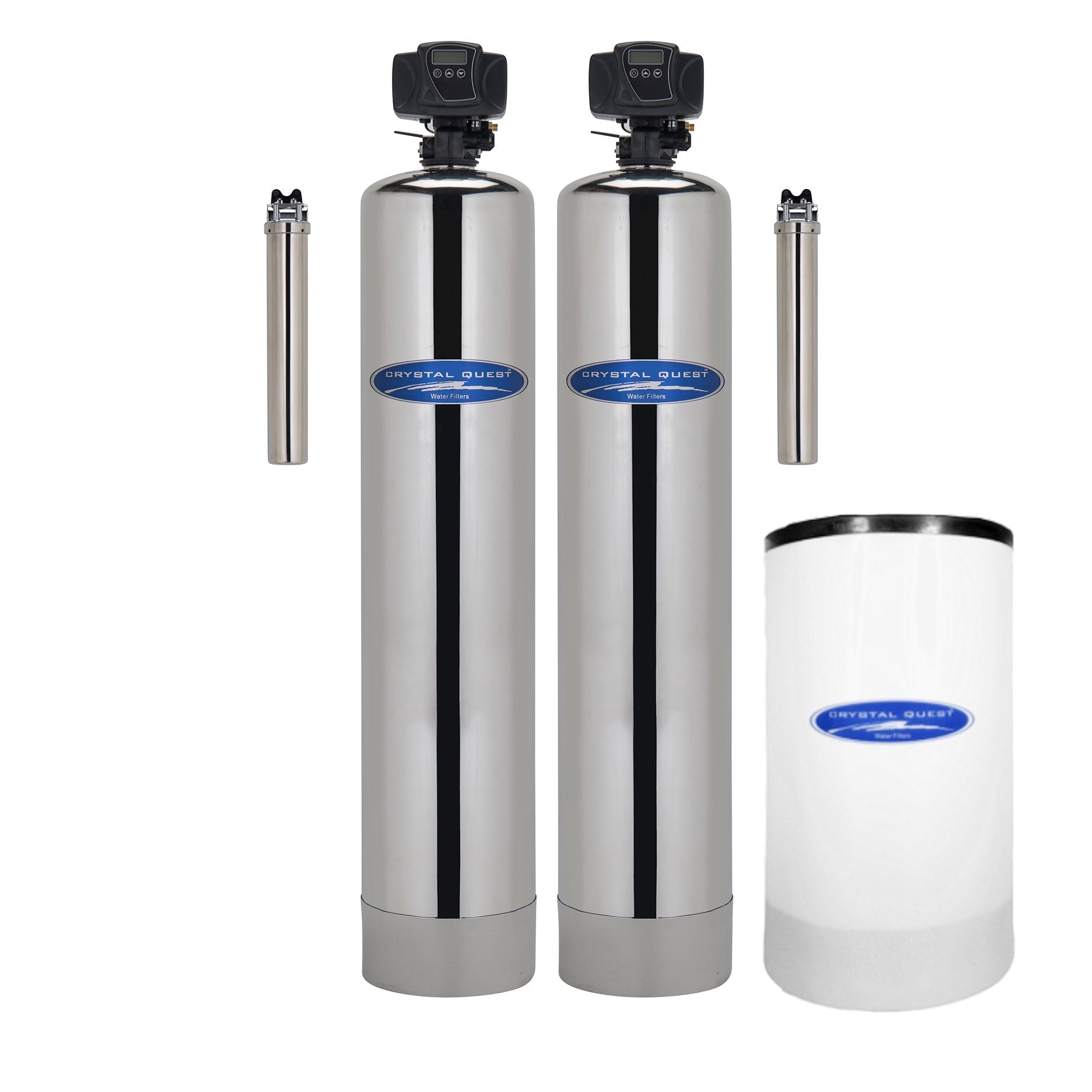
Stainless steel filter + softener
Choose both when filtration and hardness are separate priorities. You can start with the filter in the home-matching flow.
Both units require maintenance, space and a suitable installation.
Equipment pricing includes free U.S. shipping. Installation and applicable taxes are separate. You hire and pay your plumber directly.
For drinking water alone, a suitable kitchen-tap filter may be enough. Keep working equipment that already meets your goal. Wells, shared plumbing and unusually high demand need a separate assessment. No Clearhouse system is claimed to remove every substance in this report. Source
Choose equipment using model-specific performance evidence and maintain it as instructed. Removing disinfectant throughout a home also changes microbial protection in the plumbing. Source
Your water report is the start. Your home decides the fit.
A few household details help narrow the size. Choose “I’m not sure” for any details you don’t know.
- Confirm the name on your water bill.
- Share bathrooms, household size and existing equipment.
- Choose a system. Hire your own plumber.
Want help choosing?
Send your water goals to Clearhouse for a fit review.
Common questions
Why do other websites describe Sarasota water as very hard?
MyTapWater’s Sarasota listing shows 350 mg/L (20.5 gpg), labeled as a regional estimate based on USGS data. It is not a measurement of treated water delivered to your home. That estimate and the county’s 2024 softening guidance describe different evidence; use your utility’s information and a home test for a treatment decision. Source
What about hardness for City of Sarasota customers?
The city’s 2025 report describes reverse osmosis and ion-exchange treatment but does not provide a finished-water hardness value. The county’s 120–125 mg/L guidance belongs to a different utility. City customers should confirm hardness with their utility or test their incoming water. Source
Can I use the city report if my bill says Sarasota County?
Use the Sarasota County Public Utilities report instead. The city table on this page describes a separate utility. A Sarasota ZIP code does not determine the supplier or the water conditions at your tap. Source
Is a water softener required?
No. Softening is optional and is a separate decision from filtration. Use a home hardness test and your preferences about scale and water feel; your plumber confirms equipment size and settings.
Does this report test my home?
No. Utility reports describe particular systems and sample periods. Plumbing, service lines and treatment already in a home can change the result at the tap.
Will one whole-home filter remove everything listed?
No. Select equipment by its specific tested or certified reduction claims and rated flow. A long contaminant list is not evidence that a particular system removes every item.
Sources & methodology
We transcribe selected utility results and retain sample dates, units, sampling basis and source links. We separate regional supply samples from local distribution data and flag source inconsistencies. Missing data are not treated as non-detections.
Clearhouse sells water treatment equipment and is not a utility or testing laboratory. Report presence alone does not establish a health risk, a need for treatment or a product’s removal performance.
- Sarasota County · 2024 Consumer Confidence Report · hardness guidance (printed page 14)
- MyTapWater · Sarasota regional hardness estimate and its stated limitations
- City of Sarasota · 2025 · detailed table below
- Sarasota County Public Utilities · full 2025 report
- Sarasota County · water sources and service information
- Source · USGS
- Source · CDC
- MyTapWater · City of Sarasota · FL6580326 · Source reviewed October 3, 2026