What’s in Naples-area water?
Start with your supplier. Naples and Collier County are different systems.
Collier County Water Sewer District reported 42–94 mg/L of hardness in 2024, about 2.4–5.5 grains per gallon. That treated-water range is specific to the county utility. City of Naples has its own report and hardness figures. Source
Email report
Email this water report
Keep a copy for yourself, or share it with someone else.
Email sharing is coming soon. This preview does not send or save email addresses.
Choose the report for your utility
A Naples mailing address does not identify the utility. Collier County Water Sewer District and City of Naples operate separate drinking-water systems. Use the supplier on your bill; these tables do not represent Marco Island, other utilities or private wells.
Match the utility and system on your water bill. A ZIP code or mailing address does not establish service boundaries.
What the reports measured
Browse the selected results by utility. These are substances and indicators—not a count of hazards in your home. Open the linked reports for the complete utility records.
ppm = mg/L; ppb = µg/L; ppt = ng/L. ND means below detection, not zero. MCL and MRDL are regulatory benchmarks reported in the source; action levels trigger system action. Annual averages, individual samples and household-tap percentiles are different measures. Compare like with like.
Sample years stay attached to each result. These historical reports do not replace current utility notices or a test of your tap.
15 report entries
No entries match. Try another search or source.
01Collier County Water Sewer District · compliance tablesReported results, sample dates and source links9
| Substance / indicator | Reported result | Benchmark in source | Sample year / source |
|---|---|---|---|
| Fluoride | 0.23 ppmReported detected level | MCL 4 ppm | 2023 Source |
| Nitrate (as nitrogen) | 0.11 ppmReported detected levelIndividual range: ND–0.11 ppm | MCL 10 ppm | 2024 Source |
| Sodium | 57.8 ppmReported detected levelIndividual range: 45.6–57.8 ppm | Source standard 160 ppm | 2023 Source |
| Barium | 0.0033 ppmReported detected levelIndividual range: ND–0.0033 ppm | MCL 2 ppm | 2023 Source |
| Chloramines | 3.4 ppmReported compliance averageIndividual range: 1.6–4.1 ppm | MRDL 4 ppm | 2024 Source |
| Haloacetic acids (HAA5) | 29.5 ppbReported compliance valueIndividual range: 17.7–34.6 ppb | MCL 60 ppb | 2024 Source |
| Total trihalomethanes (TTHM) | 60.4 ppbReported compliance valueIndividual range: 34.1–75.4 ppb | MCL 80 ppb | 2024 Source |
| Copper · household tapsNo sampled sites exceeded the action level. | 0.0378 ppm90th percentile · August–September | Action level 1.3 ppm | 2023 Source |
| Lead · household tapsNo sampled sites exceeded the action level. | 1.2 ppb90th percentile · August–September | Action level 15 ppb | 2023 Source |
02Collier County Water Sewer District · selected PFAS resultsReported results, sample dates and source links6
| Substance / indicator | Reported result | Benchmark in source | Sample year / source |
|---|---|---|---|
| PFOSND does not mean zero; no exact concentration is assigned. | Not detectedOctober 2024 UCMR5 sample | See report for reporting limits | 2024 Source |
| PFOAND does not mean zero; no exact concentration is assigned. | Not detectedOctober 2024 UCMR5 sample | See report for reporting limits | 2024 Source |
| PFHxSND does not mean zero; no exact concentration is assigned. | Not detectedOctober 2024 UCMR5 sample | See report for reporting limits | 2024 Source |
| PFNAND does not mean zero; no exact concentration is assigned. | Not detectedOctober 2024 UCMR5 sample | See report for reporting limits | 2024 Source |
| PFBSND does not mean zero; no exact concentration is assigned. | Not detectedOctober 2024 UCMR5 sample | See report for reporting limits | 2024 Source |
| PFBAND does not mean zero; no exact concentration is assigned. | Not detectedOctober 2024 UCMR5 sample | See report for reporting limits | 2024 Source |
A closer look at your local water
These results describe Collier County Regional Water Treatment Plant (FL5114069), not every home or water system in Collier County. Match this system to your water bill before using the results.
Source record: COLLIER COUNTY REGIONAL WTP · Selected test records: 2014-04-07 – 2025-04-23
Results come from different testing periods. A detection is not, by itself, a finding that water is unsafe. “Not detected” means below the test’s reporting level; it does not mean zero. Missing results mean we have not verified that data here.
PFAS monitoringNone of 29 tested PFAS compounds detected
MyTapWater reports no detections in this panel. Reporting limits vary by compound. The named compounds below are those individually verified in the retrieved source; the full panel is available through the source link. Selected PFAS sample dates: 2024-10-21 – 2025-04-23
18 selected entries
- PFBS
- PFDA
- PFDoA
- PFEESA
- PFHpA
- PFHpS
- PFHxA
- PFHxS
- PFMBA
- PFMPA
- PFNA
- PFOA
- PFOS
- PFPeA
- PFPeS
- PFTA
- PFTrDA
- PFUnA
Lithium monitoringNot detected
MyTapWater reports lithium was tested and not detected. Sample dates and reporting limits: see the source report.
More tested substances12 selected entries
Selected historical tests, with their original dates. “Detected” means at least one positive result in the listed period. “Below reporting level” means all retrieved samples for that entry were below the reporting level. These older tests do not describe today’s water at your tap.
| Substance | Reported result | Sampling period |
|---|---|---|
| HAA5 | Detected | – |
| HAA6Br | Detected | – |
| HAA9 | Detected | – |
| chlorate | Detected | – |
| chromium | Detected | – |
| chromium-6 | Detected | – |
| strontium | Detected | – |
| vanadium | Detected | – |
| butylated hydroxyanisole | Below reporting level | – |
| germanium | Below reporting level | – |
| o-toluidine | Below reporting level | – |
| quinoline | Below reporting level | – |
This is a selection of results from MyTapWater, which compiles public water-system records. Open the source for the complete tables, methods and reporting limits. Check your utility’s latest report and current notices for updates. Source
A list of tested substances is not a list of what a filter removes. Choose a system using its verified contaminant-reduction specifications and your water source. A softener addresses hardness and remains optional.
Do you need a water softener?
No. Softening is optional and is a separate decision from filtration. Use a home hardness test and your preferences about scale and water feel; your plumber confirms equipment size and settings.
The county utility’s 2024 report gives 42–94 mg/L, with a 67 mg/L average: soft to moderately hard on the USGS scale. That is treated drinking water, not untreated regional groundwater. The City of Naples figure is identified separately below. A softener is optional; a home test helps you decide whether scale or water feel warrants one. Source
Hardness describes dissolved minerals, not an overall water safety score. A filter and a softener do different jobs. Source
Use my water and home detailsCollier County Water Sewer District · 2024 · 42–94 mg/L
Use the source and period shown here. Confirm your supplier and test incoming water before an existing home softener. Source
Softening is an optional choice for scale and water feel.
A filter, a softener, or both?
Choose the job you need done. Size comes next, based on water use and peak flow.
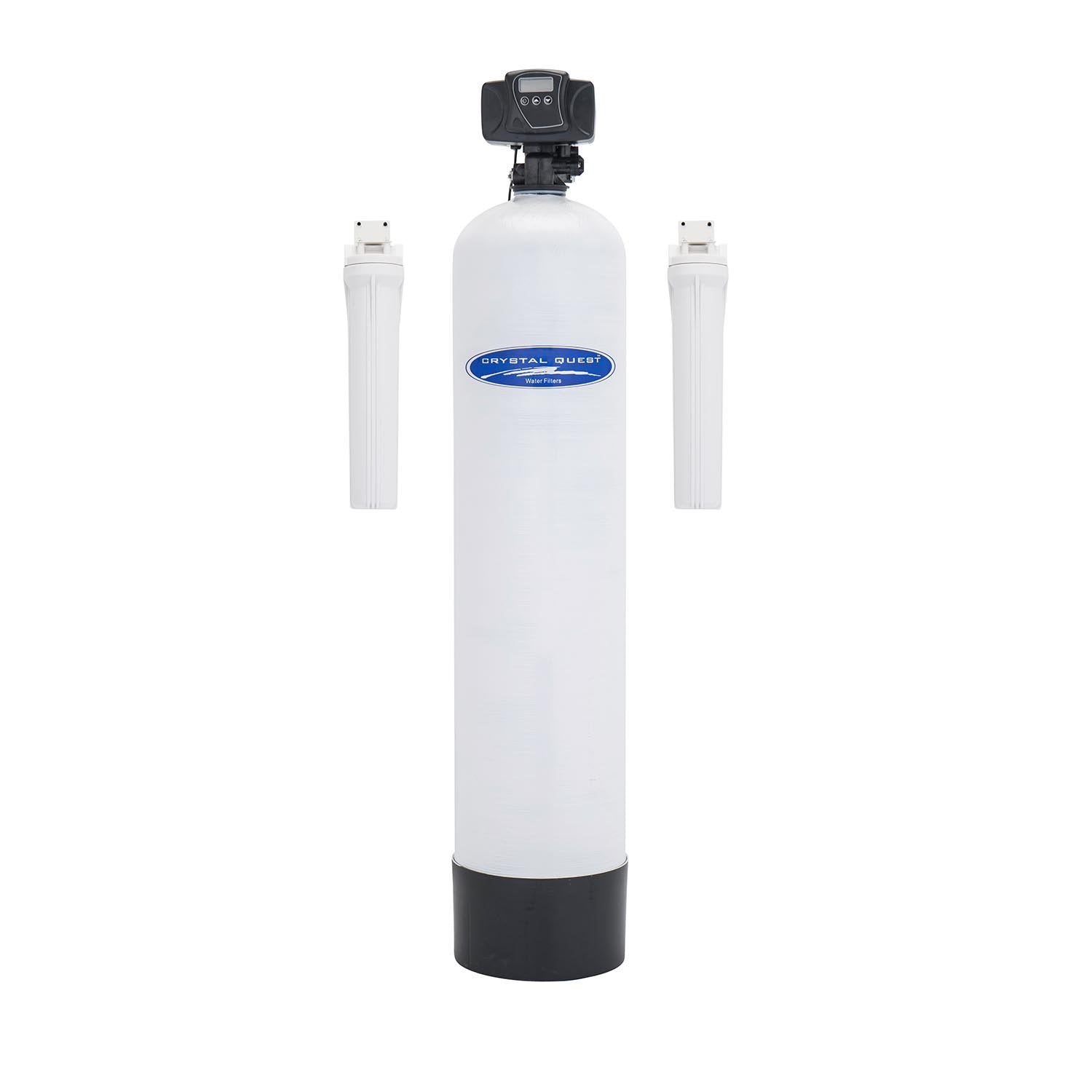
Whole-home filter
For whole-home filtration goals. Match the exact system’s performance claims to the substances you want to address.
A filter alone does not replace a hardness-removing softener.
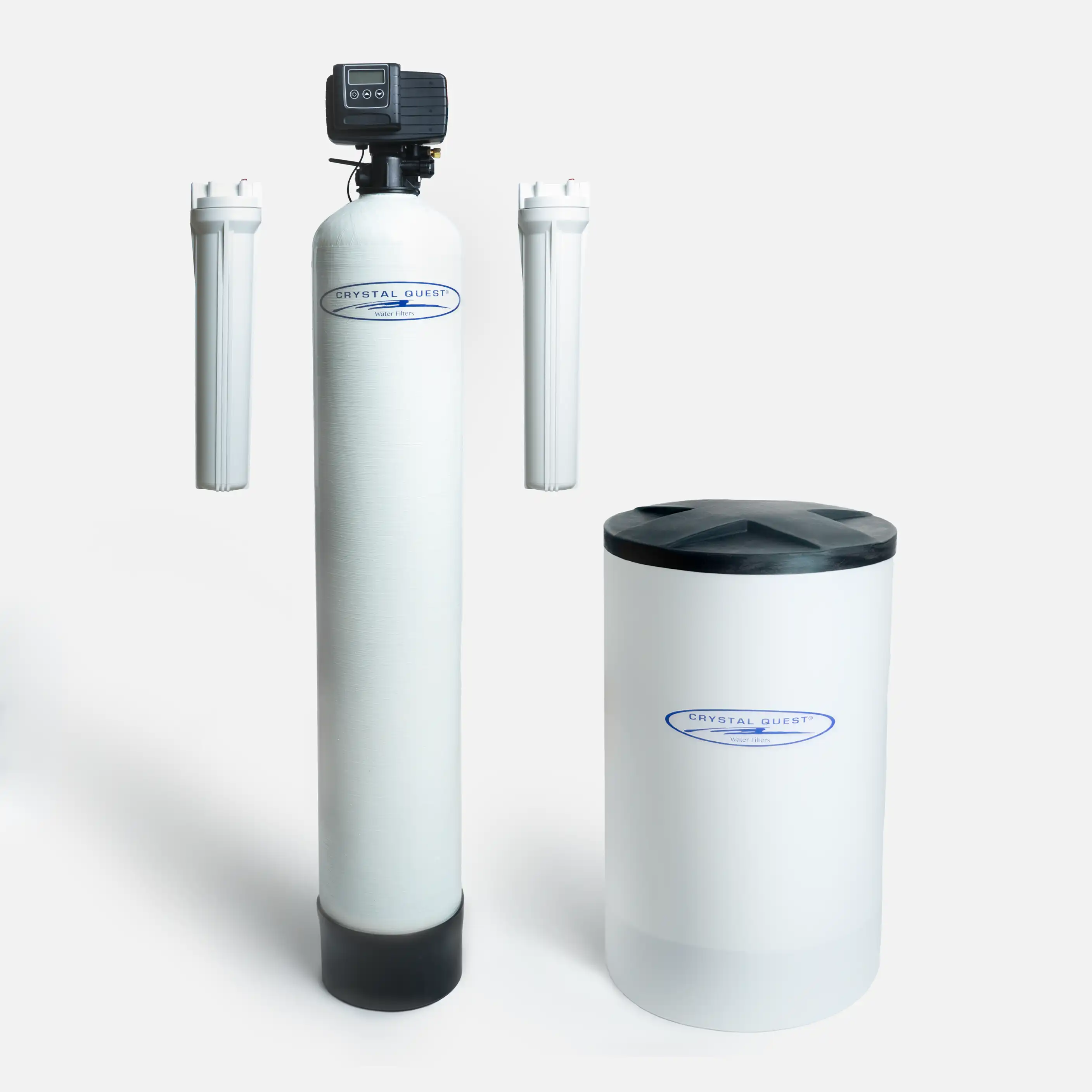
Whole-home softener
Optional for hard-water scale and water feel. A softener removes hardness minerals; it is not a general contaminant-removal system.
A softener does not replace a filter selected for a specific contaminant.
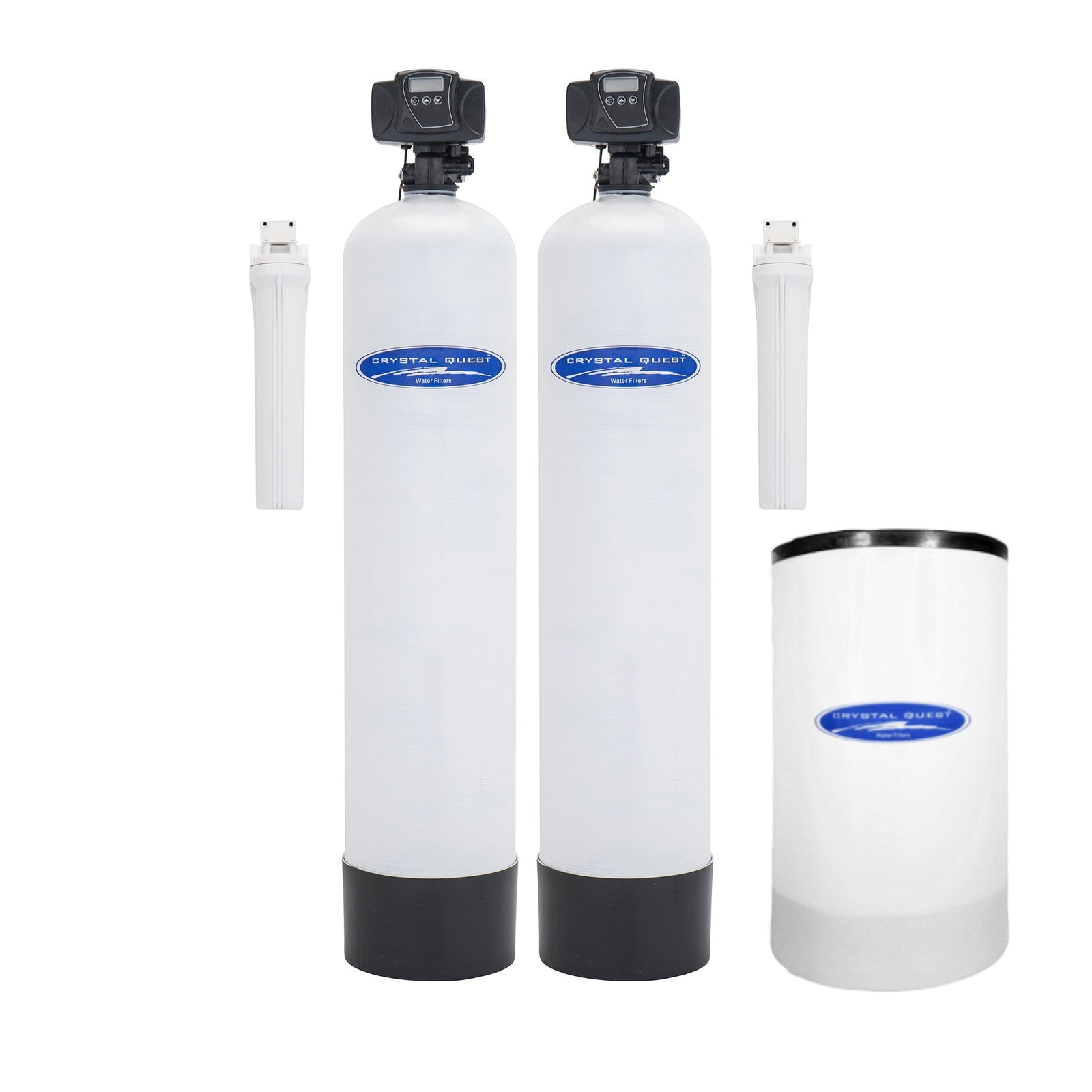
Filter + softener
Choose both when filtration and hardness are separate priorities. You can start with the filter in the home-matching flow.
Both units require maintenance, space and a suitable installation.
Proposed pricing. Installation, shipping and tax are additional. Purchases are paused during the pilot. You hire and pay your plumber directly.
For drinking water alone, a suitable kitchen-tap filter may be enough. Keep working equipment that already meets your goal. Wells, shared plumbing and unusually high demand need a separate assessment. No Clearhouse system is claimed to remove every substance in this report. Source
Choose equipment using model-specific performance evidence and maintain it as instructed. Removing disinfectant throughout a home also changes microbial protection in the plumbing. Source
Your water report is the start. Your home decides the fit.
A few household details help narrow the size. Your street address is optional, and “I’m not sure” is always an option.
- Confirm the name on your water bill.
- Share bathrooms, household size and existing equipment.
- Choose a system. Hire your own plumber.
Want help choosing?
Send your water goals to Clearhouse for a fit review.
Common questions
Does a Naples address mean I receive City of Naples water?
No. Check the utility name on your bill. The county utility and City of Naples have different reports; other providers and private wells need their own water information. Source
Why can a regional estimate say “very hard” when the utility number is lower?
Regional groundwater and delivered drinking water are different measurements. Collier’s report describes membrane treatment and lime softening. Use the dated finished-water figure for your supplier, then test at home before deciding on a softener. Source
Is a water softener required?
No. Softening is optional and is a separate decision from filtration. Use a home hardness test and your preferences about scale and water feel; your plumber confirms equipment size and settings.
Does this report test my home?
No. Utility reports describe particular systems and sample periods. Plumbing, service lines and treatment already in a home can change the result at the tap.
Will one whole-home filter remove everything listed?
No. Select equipment by its specific tested or certified reduction claims and rated flow. A long contaminant list is not evidence that a particular system removes every item.
Sources & methodology
We transcribe selected utility results and retain sample dates, units, sampling basis and source links. We separate regional supply samples from local distribution data and flag source inconsistencies. Missing data are not treated as non-detections.
Clearhouse sells water treatment equipment and is not a utility or testing laboratory. Report presence alone does not establish a health risk, a need for treatment or a product’s removal performance.
- Collier County · 2024 report · detailed data below
- Collier County · 2025 report and current report directory
- City of Naples · 2024 report · separate hardness
- City of Naples · current report directory
- Source · USGS
- Source · CDC
- MyTapWater · Collier County Regional Water Treatment Plant · FL5114069 · Source reviewed October 3, 2026